
Monroe County Arrest Records and Court Charges
Monroe County arrest records start on the law-enforcement side of the process. The sheriff, Bloomington Police, Indiana University Police, Indiana State Police, or another arresting agency may create the first custody event. Booking may include identity confirmation, a booking photo if the roster displays one, fingerprints, property inventory, medical screening, and jail classification. That record can show custody status, bond details, holds, and the agency that made the arrest. It does not prove that a court charge was filed or that the person was convicted.
Court charges after arrest start when the Monroe County Prosecutor's Office reviews the incident and files a charging document. The charge record then moves through MyCase and the Monroe County Clerk's court file. A person may appear first in JailTracker, then later in MyCase if charges are filed. For current custody and booking detail, use the Monroe County inmate records page. For pleas, motions, sentencing, and the final case outcome, use the Monroe County criminal court records page.
The Monroe County Prosecutor's traffic infraction diversion page is one official example of how the prosecutor's office can affect the path of a filed charge or infraction.
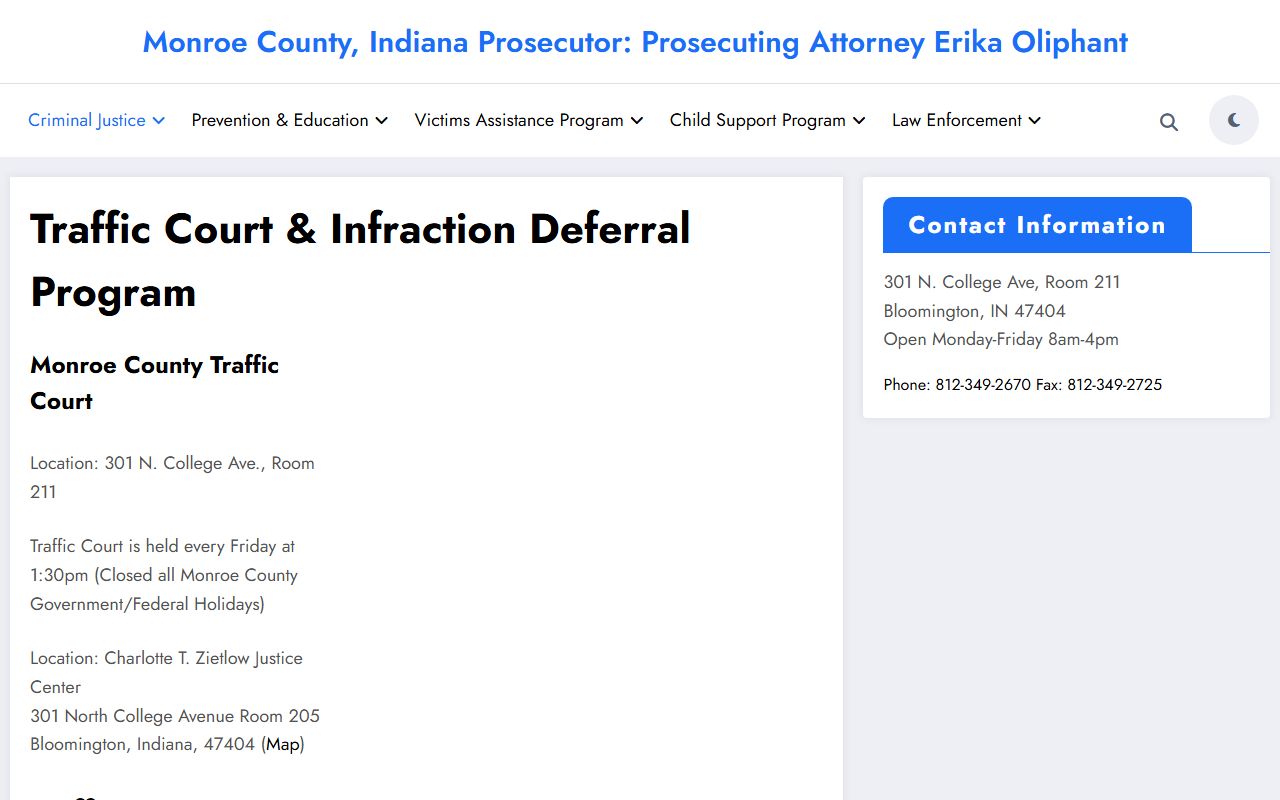
That prosecutor source matters because court charge records are created by filing decisions, not by the jail roster alone.
Search Monroe County Arrest Records and Charges
The main public court channel for filed Monroe County charges is Indiana MyCase. Search by defendant name, case number, citation number, or attorney when the public portal supports that route. A case page may show the court, case type, file date, status, judicial officer, parties, attorneys, charges, bond, disposition, financial balances, and chronological case summary entries. The chronological case summary is the docket log where filings, hearings, orders, continuances, plea activity, sentencing, and dismissal entries appear.
- Open MyCase and choose the search type that fits the information available.
- Search by full name when no cause number is known, then compare middle initials, dates, and case type carefully.
- Open the criminal case result and review the charge list before relying on a short search-result label.
- Check each charge for statute, level or class, filing date, bond, disposition, and any amended-charge entry.
- Use the sheriff's jail roster only for custody status, release logistics, and booking data.
MyCase does not always display every document image. A docket entry may show that a probable-cause affidavit, motion, or order exists without making the PDF available to the public. When a public docket is visible but a copy is needed, the Monroe County Clerk is the court-record copy channel. When the record is a sheriff incident report, jail record, or law-enforcement administrative record, the sheriff's records channel is the better fit.
The official Monroe County New Jail and Justice Facility page gives context for why custody and court-location details should be checked against current county notices.
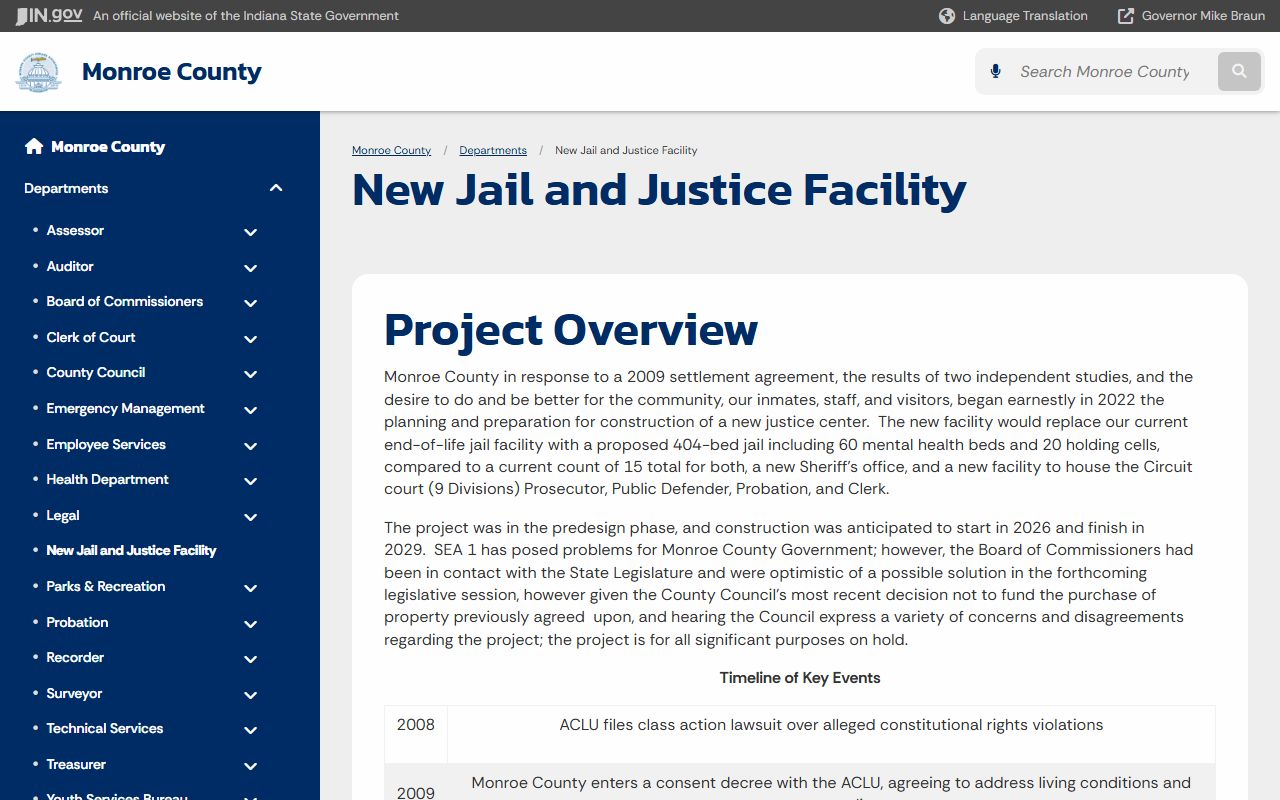
Facility planning does not change a filed charge by itself, but it can affect where jail, court, or records-service logistics are handled.
Monroe County Charging Documents
A charge record begins with a formal charging document. Indiana criminal cases commonly use an information filed by the prosecutor, while complaints and indictments can appear in the broader criminal-process vocabulary. The key point for Monroe County users is that the court charge is the accusation filed into the case, not the first booking label on a jail profile. One arrest may lead to no filed charge, one filed charge, or several separate counts.
| Document | Who Uses It | What It Starts | What to Check |
|---|---|---|---|
| Complaint | Law enforcement or prosecutor where used | An allegation or early filing route | Offense title, probable-cause language, and court assignment |
| Information | Monroe County Prosecutor's Office | Many Indiana criminal court charges | Count number, statute, charge level, and filing date |
| Indictment | Grand jury process where applicable | A formal felony accusation | Named counts, offense dates, and later amendments |
The information is especially important in Indiana practice because it shows the prosecutor's filed accusation. If the charge later changes, MyCase may show an amended filing, plea entry, dismissal, or sentencing event. Readers should track the count number because different counts in the same case can end in different ways.
Monroe County Charge Status Terms
Charge status is a moving target until the case is closed. A charge may be pending at the first hearing, amended after review, reduced as part of a plea, dismissed by court order, or resolved by conviction. MyCase may also show disposed, closed, transferred, reopened, stayed, sealed, or confidential at the case level. A single case status does not always tell the status of every count.
| Status | What It Means | Why It Matters |
|---|---|---|
| Pending | The charge is still active and no final disposition has been entered. | Hearings, plea talks, motions, or trial may still occur. |
| Amended or reduced | The filed count changed by title, statute, level, or factual basis. | The original arrest label may not match the charge that moves forward. |
| Dismissed | The court or prosecutor ended the charge without a conviction on that count. | A dismissal is not the same thing as guilt. |
| Nolle prosequi | The prosecutor declines to pursue a charge further where that entry is used. | The docket should be checked for whether other counts remain. |
| Convicted | A guilty plea or trial verdict produced a judgment on that charge. | Sentencing, probation, fines, or community corrections may follow. |
Monroe County Community Corrections is another reason to read sentencing language closely. The official Community Corrections page describes local alternatives such as home detention, day reporting, work release, and Community Alternative Supervision Program supervision.
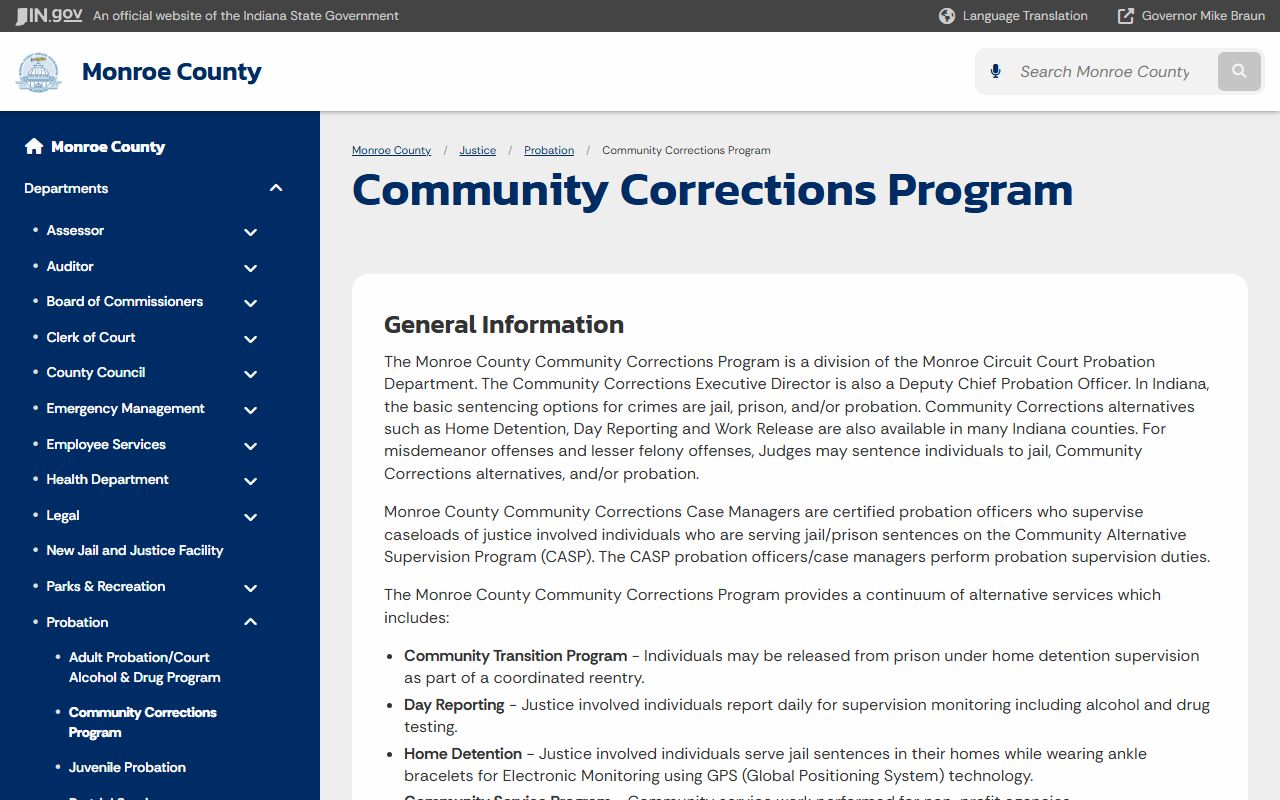
A charge record may end with supervision language rather than a simple jail or prison sentence.
Monroe County Charges vs Convictions
A filed charge is an accusation. A conviction is a final guilty judgment by plea or trial. Monroe County arrest records, jail records, and charge records can show serious allegations before any conviction exists. That distinction is critical when reading search results, background material, or a case summary. Indiana public access rules allow many dockets to be visible, but public visibility does not convert an accusation into a proven offense.
| Point | Charge | Conviction |
|---|---|---|
| Stage | Filed accusation after arrest or investigation | Final guilty finding by plea or trial |
| Proof level | Probable cause or charging decision | Proof beyond a reasonable doubt or admitted guilt |
| Where seen | Charge list, information, complaint, docket entries | Disposition, judgment, sentencing, probation entries |
| Can change | Yes, charges may be amended, reduced, or dismissed | Changes usually require appeal, post-conviction action, or expungement relief |
For employment, housing, credit, insurance, or other regulated decisions, court pages and casual searches are not a substitute for a compliant background-check process. The legal notice in the footer should be read with that limit in mind.
Monroe County Charge Codes
Charge codes connect a Monroe County court charge to an Indiana statute or offense label. A criminal case may list felony, misdemeanor, or infraction language depending on the offense. Criminal traffic matters such as OWI, reckless driving, leaving the scene, or driving while suspended can route through criminal court records rather than a simple payable infraction process. A tax warrant or civil judgment is different again, even though it can appear in a court docket.
The Monroe County tax sale page is a local example of a noncriminal court judgment process, because the Auditor and Treasurer apply for court judgment against listed real property in the Monroe Circuit Court process.
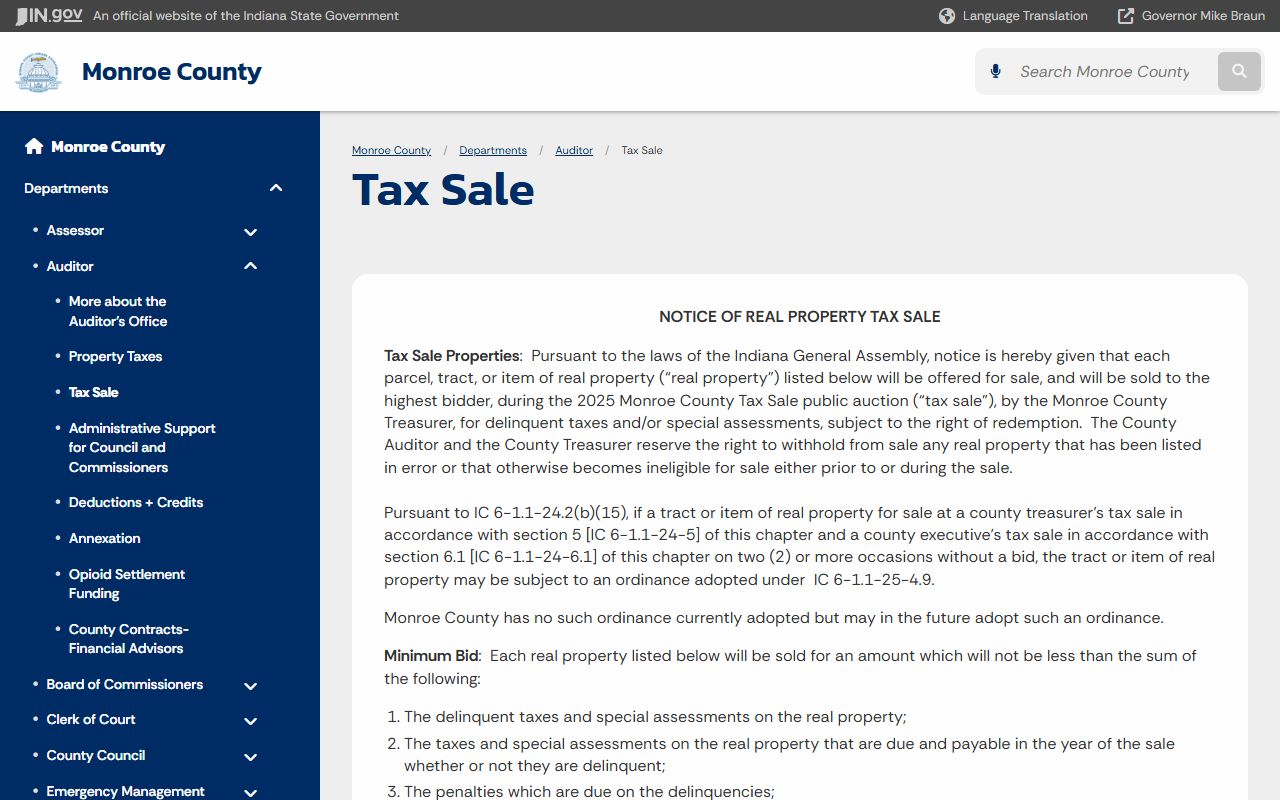
That example helps separate criminal charges from other court-filed claims, judgments, and warrants that may appear in Monroe County records.
Public Access to Monroe County Charges
Indiana court access is governed by Indiana Administrative Rule 9, while general public-agency records are addressed by the Indiana Access to Public Records Act. Many Monroe County criminal dockets are public, but access is not absolute. MyCase terms and court rules may limit documents, redact personal identifiers, or withhold confidential material. Public docket text may be enough to identify a charge, but certified copies and full file access still come through court channels.
Restricted identifiers can include Social Security numbers, financial account numbers, full birth dates, minor names, protected addresses, victim information, and confidential exhibits. Juvenile delinquency, CHINS, adoption, mental-health, sealed, and expunged records have added limits. A public search that returns no result is not proof that no record exists. It may mean the record is confidential, sealed, too new to display, filed under a different name, or held by a different system.
Sealed and Expunged Charges
Indiana expungement and sealing rules depend on the offense, disposition, waiting period, and court order. A sealed record is restricted from ordinary public access. An expunged record may be hidden from public MyCase search or limited in how it can be disclosed, but the order does not always erase every government copy. Courts, law enforcement, prosecutors, or licensing entities may keep access in categories allowed by law.
| Point | Sealed | Expunged |
|---|---|---|
| Public visibility | Hidden from ordinary public search by court order or rule | Restricted under Indiana Code 35-38-9 when granted |
| Record holder | Court or agency still keeps the file | Government systems may retain limited access as allowed |
| Eligibility | Depends on case type, rule, and order | Depends on offense, disposition, waiting period, and statute |
| Best source | The court that entered the seal order | The filing court and Indiana expungement statute |
The Indiana Public Media report on the October 28, 2025 council vote documents public debate over a proposed jail and justice complex property purchase.
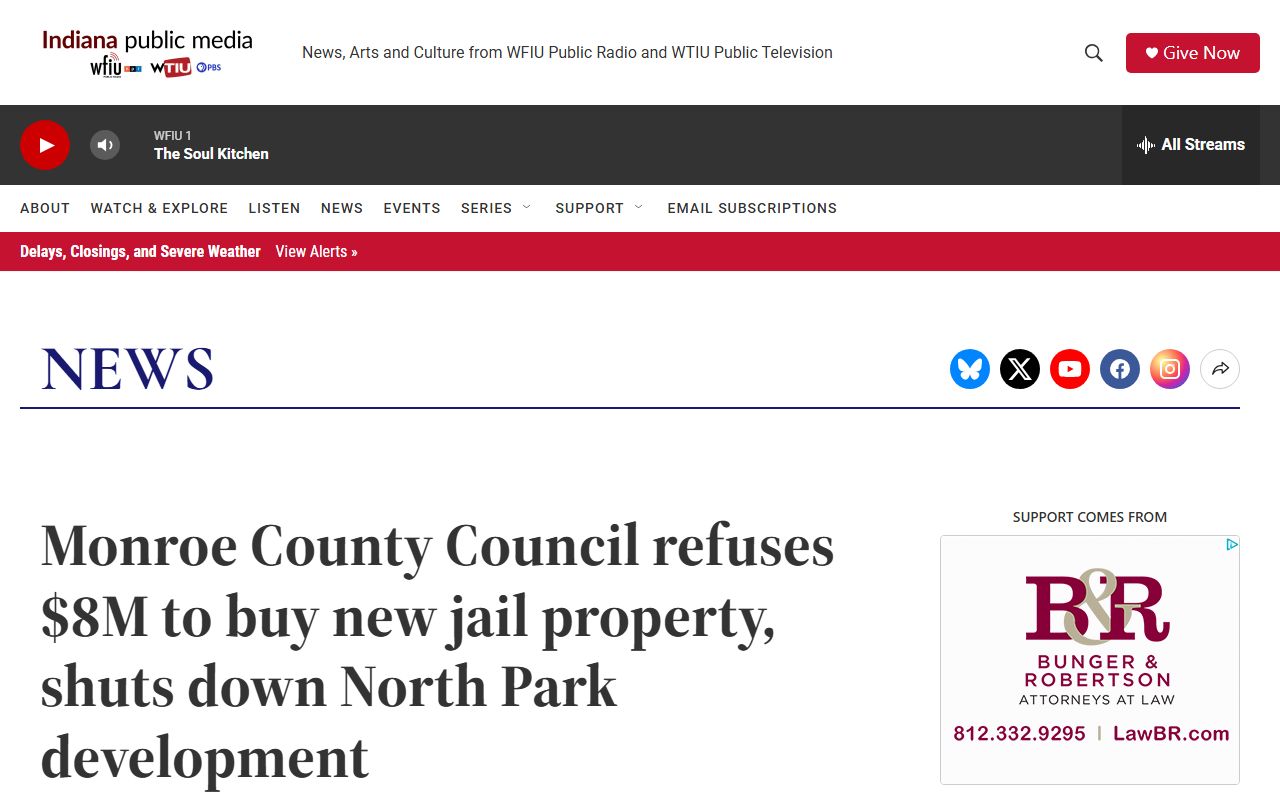
Current facility planning is separate from expungement law, but it reinforces why users should verify where records services are handled.
Monroe County Charge Record Context
Recent Monroe County justice-facility planning is relevant to arrest and charge research because the custody side, court side, prosecutor side, and public-service counters are not always the same place. The courthouse remains the public-facing court landmark, while the justice and correctional-center planning process has been active. Records users should avoid assuming that older directions, jail-service details, or office logistics will remain unchanged.
The Indiana Daily Student report from June 11, 2026 described a city-county discussion about a jail site search and identified the current downtown justice-center context.
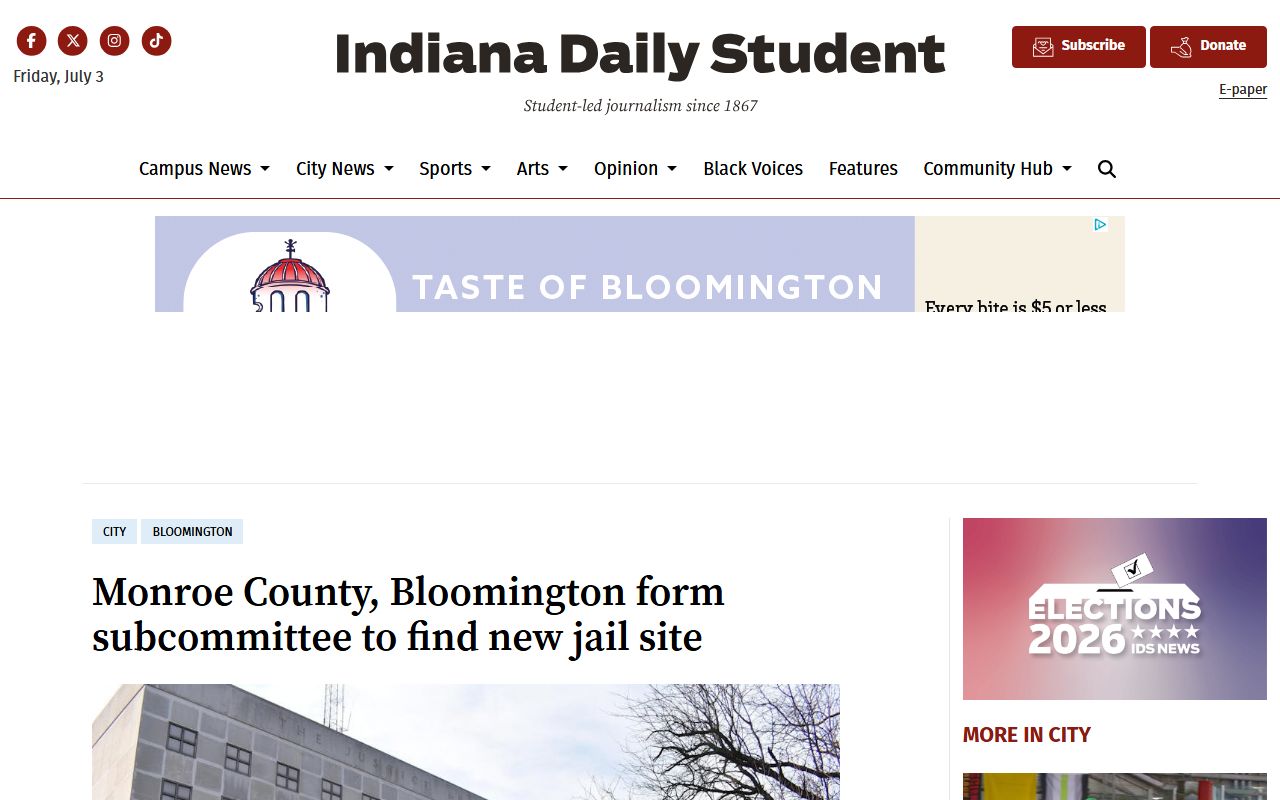
The practical record-search rule stays the same: jail custody is checked through sheriff channels, while filed charges are checked through court channels.